BestNovel
Search series
NovelAudioCategoryLibrary

Historical

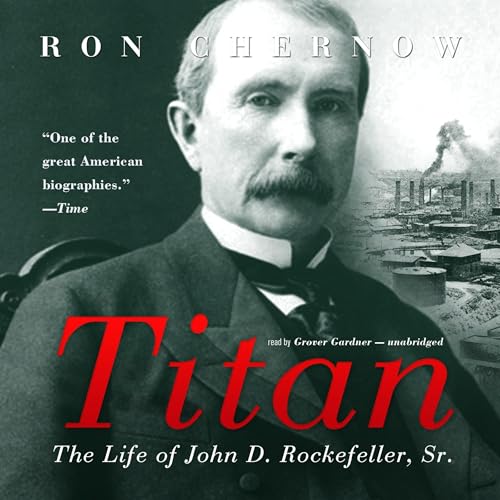
TitanGrover Gardner9.40
Publisher's Summary John D. Rockefeller, Sr., history’s first billionaire and the patriarch of America’s most famous dynasty, is an icon whose true nature has eluded three generations of historians. Now Ron Chernow, a National Book Award-winning biographer, gives us a detailed and insightful history of the mogul. Titan is the first full-length biography based on unrestricted access to Rockefeller’s exceptionally rich trove of papers. A landmark publication full of startling revelations, the book indelibly alters our image of this most enigmatic capitalist. Born the son of a flamboyant, bigamous snake-oil salesman and a pious, straitlaced mother, Rockefeller rose from rustic origins to become the world’s richest man by creating America’s most powerful and feared monopoly, Standard Oil. Branded "the Octopus" by legions of muckrakers, the trust refined and marketed nearly 90 percent of the oil produced in America. Rockefeller was likely the most controversial businessman in our nation’s history. Critics charged that his empire was built on unscrupulous tactics: grand-scale collusion with the railroads, predatory pricing, industrial espionage, and wholesale bribery of political officials. The titan spent more than 30 years dodging investigations until Teddy Roosevelt and his trustbusters embarked on a marathon crusade to bring Standard Oil to bay. While providing abundant evidence of Rockefeller’s misdeeds, Chernow discards the stereotype of the cold-blooded monster to sketch an unforgettably human portrait of a quirky, eccentric original. A devout Baptist and temperance advocate, Rockefeller gave money more generously than anyone before him - his chosen philanthropies included the Rockefeller Foundation, the University of Chicago, and what is today Rockefeller University. Titan presents a finely nuanced portrait of a fascinating, complex man, synthesizing his public and private lives and disclosing numerous family scandals, tragedies, and misfortunes that have never be

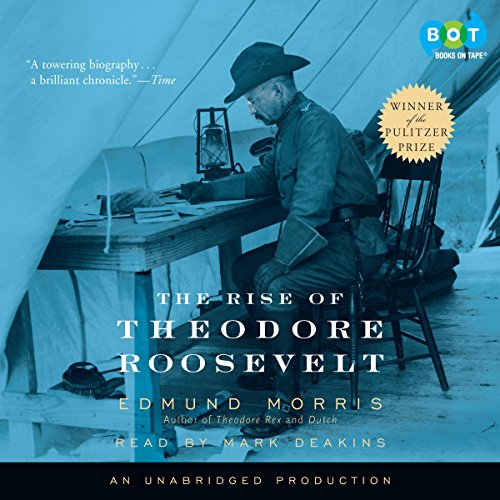
The Rise of Theodore RooseveltMark Deakins9.50
Publisher's Summary Described by the Chicago Tribune as "a classic", The Rise of Theodore Roosevelt stands as one of the greatest biographies of our time. The publication of The Rise of Theodore Roosevelt on September 14th, 2001, marked the 100th anniversary of Theodore Roosevelt becoming president. ©2001 Edmund Morris (P)2010 Random House
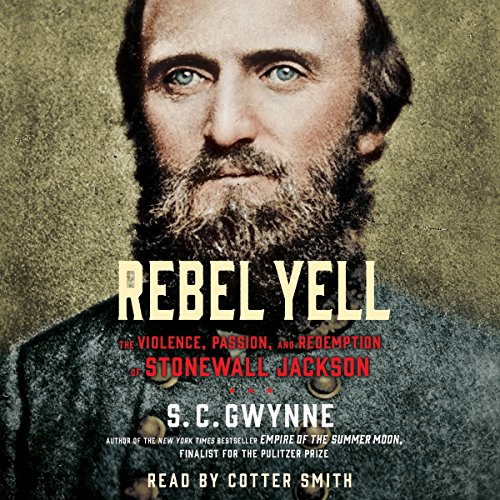
Rebel YellCotter Smith9.70
Publisher's Summary General Stonewall Jackson was like no one anyone had ever seen. In April of 1862 he was merely another Confederate general with only a single battle credential in an army fighting in what seemed to be a losing cause. By middle June he had engineered perhaps the greatest military campaign in American history and was one of the most famous men in the Western World. He had given the Confederate cause what it had recently lacked: hope. In four full-scale battles and six major skirmishes in Virginia’s Shenandoah Valley, Jackson had taken an army that never numbered more than 17,000 men and often had far less, against more than 70,000 Union troops whose generals had been ordered specifically to destroy him. And he had humiliated them, in spite of their best efforts, sent the armies reeling backward in retreat. He had done it with the full knowledge that he and his army were alone in a Union-dominated wilderness and surrounded at all times. He had even beaten a trap designed by Lincoln himself to catch him. How did he do this? Jackson marched his men at a pace unknown to soldiers of the era. He made flashing strikes in unexpected places, and assaults of hard and relentless fury. He struck from behind mountain ranges and out of steep passes. His use of terrain reminded observers of Hannibal and Napoleon. His exploits in the valley rank among the most spectacular military achievements of the 19th century. Considered one of our country’s greatest military figures, a difficult genius cited as inspiration by such later figures as George Patton and Erwin Rommel, and a man whose brilliance at the art of war transcends the Civil War itself, Stonewall Jackson’s legacy is both great and tragic in this compelling account, which demonstrates how, as much as any Confederate figure, Jackson embodies the romantic Southern notion of the virtuous lost cause. ©2014 S. C. Gwynne (P)2014 Simon & Schuster Audio
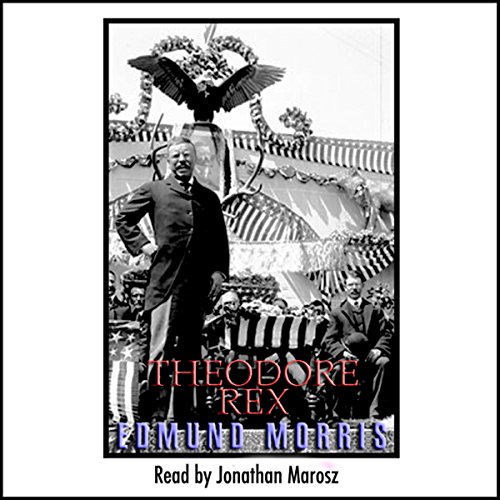
Theodore Rex (Theodore Roosevelt)Jonathan Marosz8.90
Publisher's Summary Theodore Rex is the story - never fully told before - of Theodore Roosevelt’s two world-changing terms as president of the US.  A hundred years before the catastrophe of September 11, 2001, “TR” succeeded to power in the aftermath of an act of terrorism. Youngest of all our chief executives, he rallied a stricken nation with his superhuman energy, charm, and political skills. He proceeded to combat the problems of race and labor relations and trust control while making the Panama Canal possible and winning the Nobel Peace Prize. But his most historic achievement remains his creation of a national conservation policy, and his monument millions of acres of protected parks and forest.  Theodore Rex ends with TR leaving office, still only 50 years old, his future reputation secure as one of our greatest presidents.  ©2001 Edmund Morris (P)2002 Books on Tape, Inc.
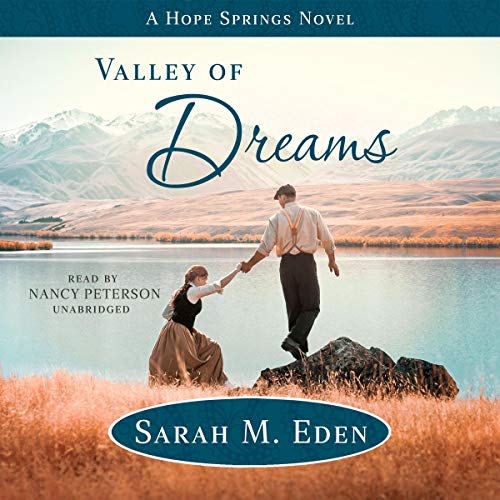
Valley of Dreams (Longing for Home)Nancy Peterson9.70
Publisher's Summary From the USA Today best-selling author of the Longing for Home series, Valley of Dreams is a new romance novel set in the beloved world of Hope Springs. Patrick O’Connor has seen far too much of the cruel and unforgiving world. Life has beaten him down relentlessly. Out of hope and out of options, he makes the terrifying and desperate decision to return home to the family he has lied to for years. The family he knows will never forgive him. Widowed and nearly unable to care for her tiny daughter under the weight of extreme poverty, Eliza Porter jumps at the opportunity to leave behind the slums of New York City for the promise of a new life and a new beginning in the frontier town of Hope Springs. Fate tosses the two of them together more and more often, while the burden of his tightly-held secrets and the ache of her abandoned dreams pull them further and further apart. Clinging to the whispered possibility of something more than the pain life has offered them thus far will require every bit of hope they can find in this peaceful but precarious valley of dreams. ©2020 Sarah M. Eden (P)2020 Sarah M. Eden
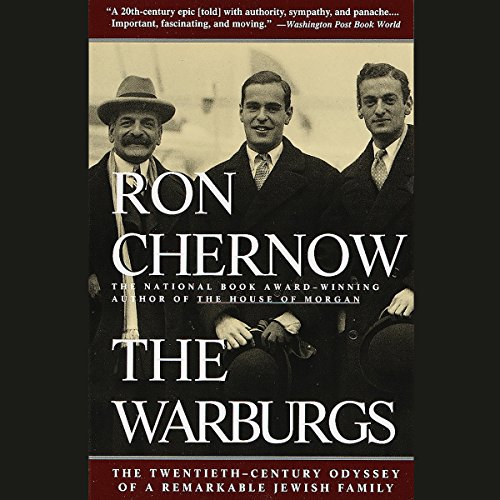
The WarburgsJonathan Reese8.50
Publisher's Summary Bankers, philanthropists, scholars, socialites, artists, and politicians, the Warburgs stood at the pinnacle of German (and, later, German American) Jewry. They forged economic dynasties, built mansions and estates, assembled libraries, endowed charities, and advised a German kaiser and two American presidents. But their very success made the Warburgs lightning rods for anti-Semitism, and their sense of patriotism became increasingly dangerous in a Germany that had declared Jews the enemy. Ron Chernow's hugely fascinating history is a group portrait of a clan whose members were renowned for their brilliance, culture, and personal energy yet tragically vulnerable to the dark and irrational currents of the 20th century. ©2016 Ron Chernow (P)2016 Random House Audio
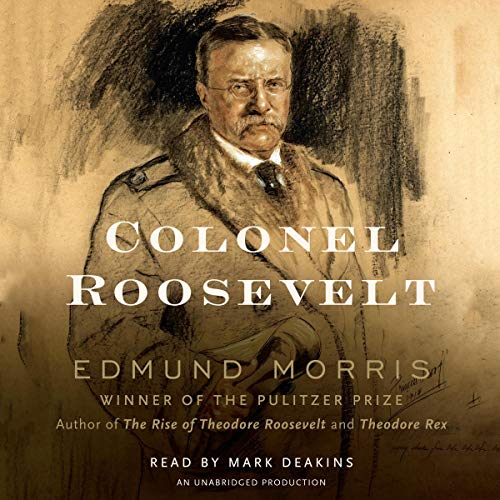
Colonel Roosevelt (Theodore Roosevelt)Mark Deakins
Publisher's Summary Of all our great presidents, Theodore Roosevelt is the only one whose greatness increased out of office. When he toured Europe in 1910 as plain “Colonel Roosevelt”, he was hailed as the most famous man in the world. Crowned heads vied to put him up in their palaces. “If I see another king,” he joked, “I think I shall bite him.”  Had TR won his historic “Bull Moose” campaign in 1912 (when he outpolled the sitting president, William Howard Taft), he might have averted World War I, so great was his international influence. Had he not died in 1919, at the early age of 60, he would unquestionably have been reelected to a third term in the White House and completed the work he began in 1901 of establishing the United States as a model democracy, militarily strong and socially just.  This biography by Edmund Morris, the Pulitzer Prize and National Book Award-winning author of The Rise of Theodore Roosevelt and Theodore Rex , is itself the completion of a trilogy sure to stand as definitive. Packed with more adventure, variety, drama, humor, and tragedy than a big novel, yet documented down to the smallest fact, it recounts the last decade of perhaps the most amazing life in American history. What other president has written 40 books, hunted lions, founded a third political party, survived an assassin’s bullet, and explored an unknown river longer than the Rhine?  ©2010 Edmund Morris; 2010 Random House Audio (P)2010 Random House Audio
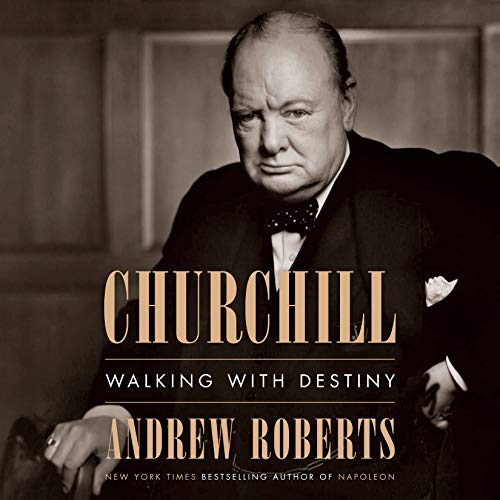
ChurchillStephen Thorne
Publisher's Summary New York Time s best seller One of The Wall Street Journal's 10 best books of 2018 One of The Economist's best books of 2018 One of The New York Times' notable books of 2018   "Unarguably the best single-volume biography of Churchill... A brilliant feat of storytelling, monumental in scope, yet put together with tenderness for a man who had always believed that he would be Britain’s savior." ( Wall Street Journal)   In this landmark biography of Winston Churchill based on extensive new material, the true genius of the man, statesman, and leader can finally be fully seen and understood - by the best-selling, award-winning author of Napoleon and The Storm of War When we seek an example of great leaders with unalloyed courage, the person who comes to mind is Winston Churchill: the iconic, visionary war leader immune from the consensus of the day, who stood firmly for his beliefs when everyone doubted him. But how did young Winston become Churchill? What gave him the strength to take on the superior force of Nazi Germany when bombs rained on London and so many others had caved? In Churchill, Andrew Roberts gives listeners the full and definitive Winston Churchill, from birth to lasting legacy, as personally revealing as it is compulsively listenable. Roberts gained exclusive access to extensive new material: transcripts of War Cabinet meetings, diaries, letters, and unpublished memoirs from Churchill's contemporaries. The Royal Family permitted Roberts - in a first for a Churchill biographer - to read the detailed notes taken by King George VI in his diary after his weekly meetings with Churchill during World War II. This treasure trove of access allows Roberts to understand the man in revelatory new ways, and to identify the hidden forces fueling Churchill's legendary drive. We think of Churchill as a hero who saved civilization from the evils of Nazism and warned of the grave crimes of Soviet communism, but Roberts's masterwork reveals th
Loading more

Loading more

LibraryNovelAudioCategoryMe